
60 Sensors. 81 Minutes. Zero Movement. The Painting Was Gone.
The Gardner Heist Has A Detail Nobody Talks About — And It Makes No Physical Sense

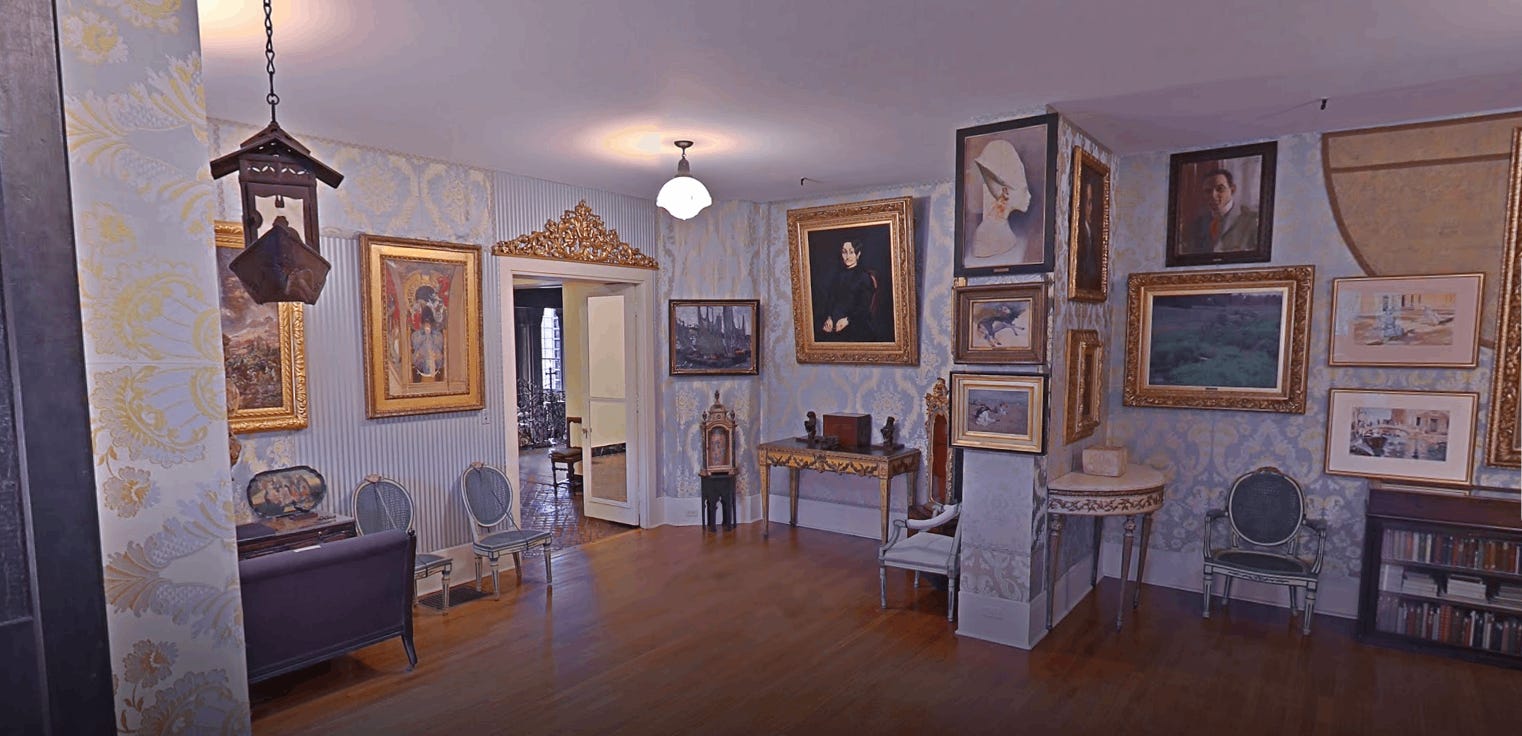
THE CRIME SCENE: The Blue Gallery. On the night of the heist, this room contained Chez Tortoni. By morning, the painting was gone, but the motion sensors recorded absolute stillness.
On March 18, 1990, thieves stole thirteen masterpieces from the Isabella Stewart Gardner Museum in eighty-one minutes. The FBI tracked their every move through sixty infrared motion sensors installed throughout the building.
Except in one room.
In the Blue Gallery on the first floor, Edouard Manet’s Chez Tortoni—a small, intimate bar scene—disappeared without triggering a single sensor.
Not one. The computer logs show zero movement in that room during the entire heist.
This is physically impossible. Unless someone else took it first.
🎥 "The sensors said no one was there... but the painting was gone."
Rick Abath died without ever telling the full story. But in my latest video, I analyze his final decisions, the police reports, and the one mistake that changed art history forever.
Video investigation by CODEX CONFIDENTIAL on the 1990 Isabella Stewart Gardner Museum theft and the FBI's prime suspects.
THE TECHNICAL PROBLEM
Let me show you why this matters.
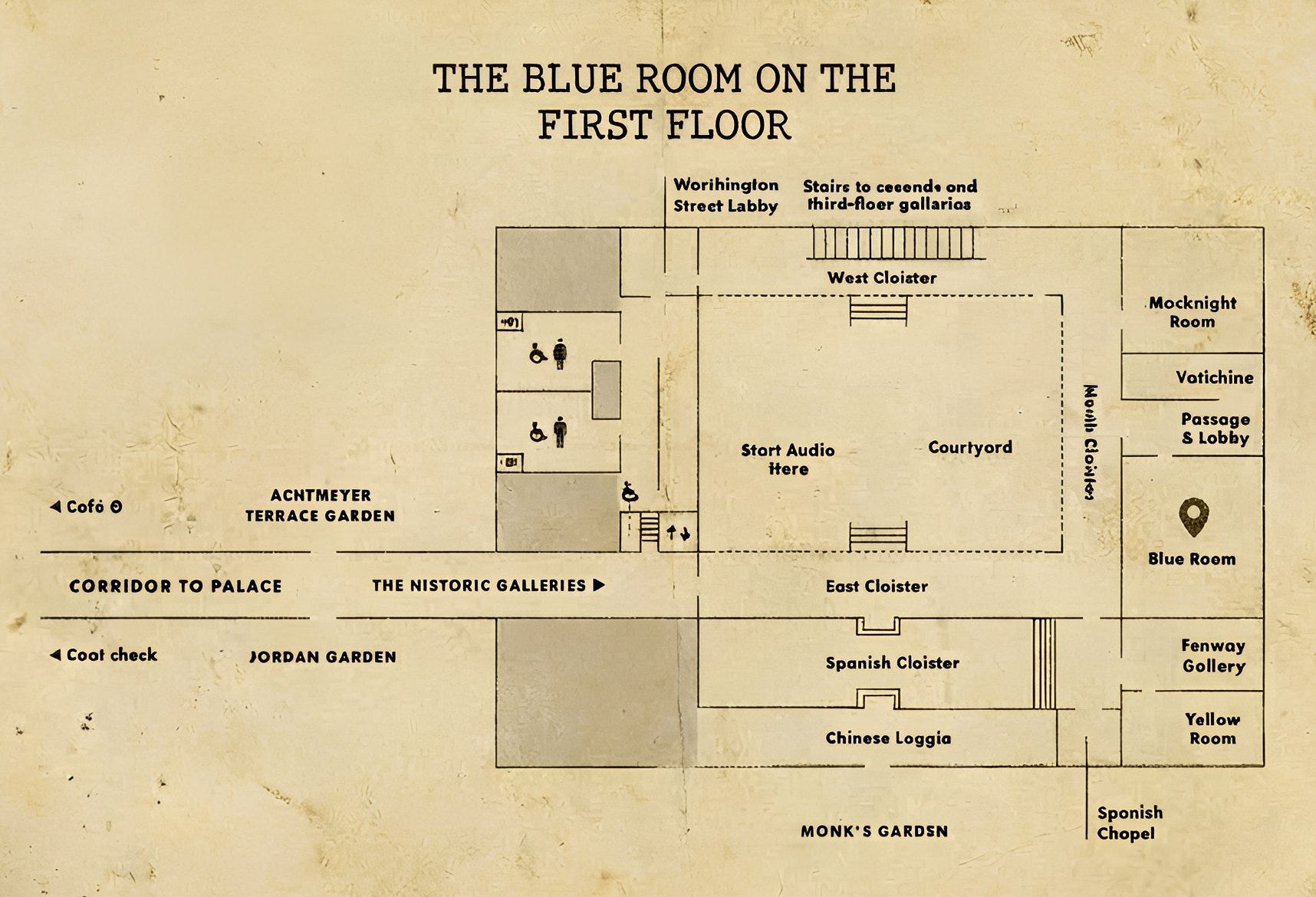
The Ground Floor Layout. The Blue Gallery (bottom right) is an architectural dead end. To enter it, the thieves had to pass through the Spanish Cloister—yet the motion detector at that specific threshold never triggered.
The Gardner Museum’s security system in 1990 wasn’t sophisticated, but it was functional. Sixty Aerotech infrared motion detectors were mounted in the doorjambs—the frames of the doors—throughout the building. Every time someone crossed a threshold, the system logged it to an IBM computer at the security desk.
The sensors worked. We know this because they tracked the thieves’ movements through the museum with brutal precision:
1:48 AM - Motion detected entering the Dutch Room
1:51 AM - Motion detected in the Short Gallery
Multiple entries - Approximately thirty threshold crossings recorded during the eighty-one-minute theft
The thieves triggered sensors constantly as they moved from gallery to gallery, cutting Rembrandts from their frames, smashing proximity alarms, grabbing whatever caught their eye.
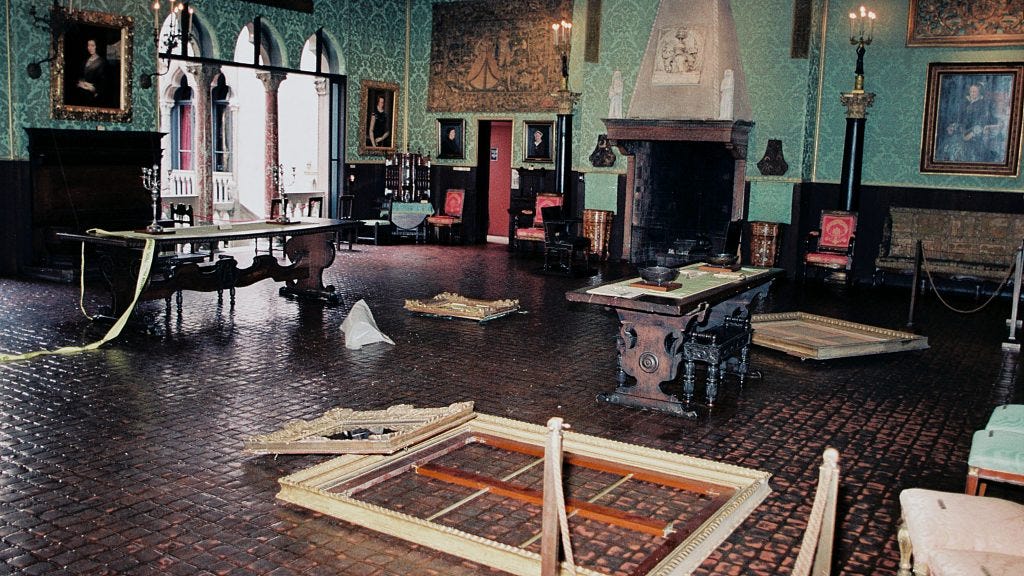
THE CONTRAST: While the Dutch Room (pictured here) was left in total disarray with frames smashed on the floor, the Blue Gallery remained eerily untouched. This violence proves the thieves were active in other parts of the museum, making the “silent theft” of the Manet even more of a paradox.
But the Blue Gallery? Silent.
The computer registered zero movement in that room while the thieves were in the building. Yet when staff arrived at 6:45 AM, Chez Tortoni was gone.
THE VALIDATION TEST
A month after the heist, security consultant Steven Keller ran a test. Could the sensors be fooled? Could someone slip past them undetected?
Keller tried everything:
Walking on tiptoes
Crawling on the floor
Moving in slow motion
The “duck walk” that guard Rick Abath claimed he used as a party trick.
The system detected him every single time.
The sensors weren’t the problem. They were mounted at doorjamb height specifically to catch anyone entering or exiting. The infrared beams covered the full width of the doorway. There was no blind spot, no gap to exploit.
Keller’s conclusion was unambiguous: “It’s impossible to enter the Blue Gallery without being detected.” But the painting was stolen. So someone entered.
Which means the sensors didn’t fail-they simply didn’t record the person who took the Manet because that person had already been logged somewhere else.
THE ONLY REGISTERED MOVEMENT
The computer logs tell a clear story.
Only one person was detected in the Blue Gallery that night: Richard “Rick” Abath, the 23-year-old security guard who opened the door to let the thieves in.
Abath’s movements were logged during his routine patrol rounds, which he completed around 1:00 AM- twenty-four minutes before the thieves arrived.
After that? Nothing.
No sensors tripped in the Blue Gallery while the two fake cops spent eighty-one minutes ransacking the museum.
Former FBI agent Geoffrey Kelly, who led the investigation for over twenty years, put it bluntly in 2024:
“I’m personally convinced that Abath took that Manet. The motion detector data doesn’t lie.”
THE PAINTING ITSELF: BUILT TO DISAPPEAR
Chez Tortoni was the perfect piece to steal quietly.
Unlike the massive Rembrandt seascape (five feet wide, cut brutally from its frame) or the Vermeer (worth $200 million and instantly recognizable), the Manet was:
Small - An intimate bar scene, roughly the size of a laptop
Portable - Could be rolled, folded, or slipped under clothing
Obscure - Not widely reproduced in popular media
Frameless - The frame was found placed on the director’s chair at the security desk, suggesting it was removed carefully, not smashed.
George Reissfelder, one of the prime suspects, allegedly had a painting matching Chez Tortoni’s description hanging in his bedroom weeks after the heist. His sister remembered it because he’d put it in a “too ostentatious” gold frame.
It looked, to the untrained eye, like just another painting.
THE TWENTY-FOUR-HOUR WINDOW
What the Frame Tells Us.
When museum staff discovered the theft at 6:45 AM, they found something odd.
The frames from the Dutch Room—where the massive Rembrandts and the Vermeer were stolen—had been destroyed. Cut. Smashed. Left on the floor like garbage.
But the frame for Chez Tortoni?
It was carefully placed on the security director’s chair. Not thrown aside. Not damaged. Positioned.
Some investigators see this as a taunt. A calling card. A way to say: We were here, and we controlled every detail.
Others see it differently: it’s the signature of someone who had time, who wasn’t in a panic, who removed the painting deliberately and placed the frame somewhere it would be noticed.
The kind of thing you’d do if you were alone. If you weren’t being rushed. If you were, say, a guard on a quiet patrol shift with no one watching.
The night before the heist-March 17, 1990, at 1:00 AM-Rick Abath let an unidentified man into the museum.
This was captured on security video and released by the FBI decades later as part of a public pressure campaign. The man entered through the same side door the thieves would use the next night. He spoke with Abath at the security desk for several minutes, then left.
When questioned, Abath said he didn’t remember the incident and couldn’t identify the man.
Some former guards identified the visitor as Lawrence O’Brien, the museum’s assistant director of security. But O’Brien’s family and coworkers insisted it wasn’t him-the man in the video was significantly taller, and the hairstyle didn’t match.
The museum’s current security director, Anthony Amore, claims the person “has been identified with absolute certainty” and had no connection to the crime. But that identification has never been made public.
Why was someone inside the museum at 1:00 AM the night before a half-billion-dollar heist? And why can’t Abath remember?
THE “DUCK WALK” DEFENSE
Abath had an explanation for how he could move through the galleries undetected.
During his 2010 grand jury testimony, he admitted that he and other night guards played a game: they tried to complete their patrols without triggering a single motion sensor. Abath claimed he’d mastered a “duck walk”-a shuffling, low-to-the-ground technique inspired by rock-and-roll legend Chuck Berry-that let him cross doorways without breaking the infrared beam.
It was, he said, just a way to combat boredom.
But remember Steven Keller’s test. The consultant tried every conceivable method to evade the sensors and failed every time. Even crawling on the floor registered as movement.
So either:
Abath was lying about the duck walk, or
The sensors did register his movements-he just didn’t realize it
The logs show that Abath’s patrols were detected by the system during his rounds. The computer recorded him. The only reason those triggers didn’t raise alarms is because guards moving through the building during their shifts was normal.
Which raises a darker possibility: what if Abath removed the Manet during one of those “normal” logged patrols?
The system would show his movement. But it would look routine. Unremarkable. Just another guard doing his rounds.
THE DOOR THAT OPENED FOR NO REASON
At approximately 1:00 AM—minutes before the thieves rang the doorbell—Rick Abath did something strange. He walked to the side entrance, opened it, stood there briefly, then closed it again.
His explanations for this have varied:
He was “checking that it was locked”
He “didn’t feel well” and needed fresh air
He thought kids might have jumped the fence into the garden
None of these explanations make sense. Opening a door to verify it’s locked defeats the purpose. Taking air breaks wasn’t part of the security protocol. And if he suspected intruders in the garden, protocol demanded he call the police—not open the door himself.
The FBI has a different theory: it was a signal.
A visual cue to the thieves waiting in a car nearby that the inside man was ready.
Or—and this is where the Manet comes in—it was an opportunity to quickly hand off a small, rolled canvas to someone waiting outside.
WHY THIS PROBABLY CAN’T BE SOLVED
Here’s the uncomfortable truth about the Blue Gallery Paradox:
The person who knows the answer is dead.
Rick Abath died in February 2024 at age 56 in his Vermont apartment. He never confessed. He maintained his innocence until the end. Even if he wanted to come forward in his final days, he couldn’t be prosecuted—the statute of limitations for the theft expired in 1995.
But he never spoke.
And without his testimony, the forensic puzzle remains unsolvable.
The motion sensor data is circumstantial. Yes, it shows that only Abath was in the Blue Gallery that night. Yes, it proves the thieves never entered that room. But it doesn’t show him taking the painting. It doesn’t show him passing it to an accomplice. It doesn’t prove intent.
All it proves is an absence: the thieves weren’t there. Which means someone else was.
THE THREE POSSIBILITIES
Let’s lay out the scenarios based on the technical evidence:
POSSIBILITY 1: ABATH WAS THE INSIDE MAN
Abath removed Chez Tortoni during his patrol rounds before the thieves arrived. He either:
Hid it in the building to retrieve later, or
Passed it to the mystery visitor from March 17, or
Handed it off when he opened the side door at 1:00 AM
The thieves never needed to enter the Blue Gallery because the painting was already gone.
Evidence for: Motion sensor data. The unexplained door opening. The mystery visitor. Abath’s memory lapses. His claim that he could “duck
walk” past sensors (which testing proved impossible).
Evidence against: No physical proof. No confession. No money trail. And honestly, if Abath was sophisticated enough to orchestrate this, why
did he make so many obviously suspicious moves?
POSSIBILITY 2: ABATH WAS CATASTROPHICALLY INCOMPETENT